Getting a Suit or Dress Altered: What to Bring and What's Possible
A good fitting starts before you walk in, and a realistic idea of what fabric will allow saves everyone a second visit.
October 17, 2026 · 4 min read
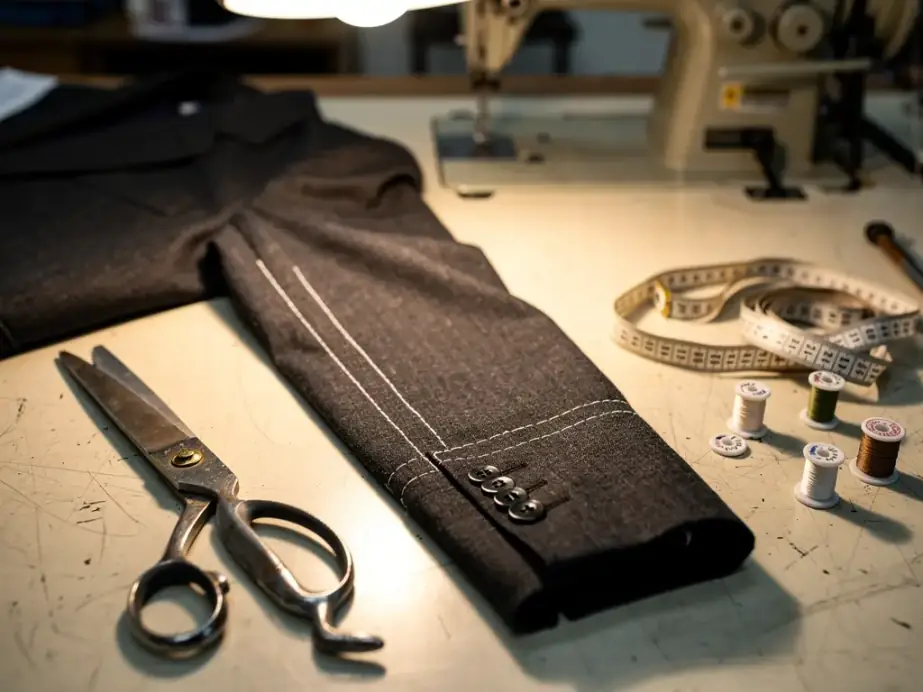
A well-altered suit or dress is the quickest way to make an ordinary garment look like it was made for you. The trouble is that most people arrive at a fitting unprepared, with the wrong shoes and a vague idea of what's fixable. A little planning makes the visit shorter and the result better. Here's what to bring, and an honest look at what a tailor can and can't do.
What to bring to a fitting
- The shoes you'll actually wear. Hem length is measured to the shoe, and a half inch of heel changes everything.
- The undergarments you'll wear with it, including shapewear, a strapless bra, or whatever sits under the garment on the day.
- A belt, a tie, or a shirt that goes with the suit, so the jacket and trouser break are judged with the real layers.
- Anything you'll carry in your pockets, such as a phone or wallet. A full pocket changes how trousers hang.
- Photos of how you want it to look, or a similar garment you love the fit of.
- The event date, so the tailor can plan the work backward from it.
Try to come when you're not rushed and wearing something easy to slip on and off. And if the garment also needs cleaning, say so at the start. Spartan Dry Cleaners can combine cleaning and alteration in one order, and its team checks quality after cleaning and before the final press, so the garment comes back both fitted and pressed fresh.
What a tailor can change easily
Hems are the simplest request. Trousers, skirts, dresses, and sleeves can usually be shortened without a fuss, and many can be lengthened if the original hem was generous. Taking in the sides of a shirt, a dress, or a jacket is also routine, as long as the seams are accessible. Waistbands can be adjusted. Zippers and hardware, including hooks, snaps, and buttons, can be replaced. Linings that have torn or worn through can be replaced, and a fresh lining often makes an old jacket feel brand new.
Spartan's in-house Master Tailor and seamstresses handle exactly these jobs for men and women. For men, that includes jacket re-tailoring, trouser refinishing, and slimming a shirt. For women, it includes formal and evening wear, couture resizing, and restyling vintage pieces.
What takes more skill, and what has limits
Letting a garment out is harder than taking it in, because it depends on how much extra fabric was left inside the seams. Some garments have a generous seam allowance, and some have almost none. A tailor can look inside and tell you in a minute whether there is room. If there isn't, a panel or a gusset may solve it, though the look changes slightly.
Jackets are where most of the skill lives. Taking in the waist and bringing the sides closer is routine. Adjusting sleeve length is usually possible, as long as the cuff has working buttons that need to be moved with it. Shoulders and collars are the hard part. They sit on structured canvas and padding, and changing them can mean rebuilding half the jacket, so they're often not worth it. A jacket that doesn't fit across the shoulders is almost always the wrong jacket.
Beaded, lace, and heavily detailed dresses need patience. Moving a hem means working around appliqué and beading. Taking in a seam through lace means rebuilding the pattern so it still lines up. A skilled seamstress can do it, but expect more time and plan your fitting early.
Repairs: linings, zippers, and invisible mending
Not every alteration is about size. Some are about saving a garment you already love. A moth hole in a wool trouser, a snag in a silk blouse, a cigarette burn on a lapel, or a small tear along a seam can often be repaired so it's hard to find, using the technique called invisible mending, which rebuilds the weave thread by thread. A broken zipper doesn't mean the garment is finished. It means the zipper gets replaced. Wedding dress repair, from a torn train to a loose bodice seam, is part of the same craft.
How to make the fitting go well
Stand naturally and let the tailor do the pinning. Stand the way you actually stand, not the way you'd like to. Sit down in the garment if you'll be sitting in it, and raise your arms if you'll be dancing. Say what feels tight or loose in a particular spot, even if it seems minor. If a decision isn't clear, ask for a second pin-up to compare. And be realistic about timing. Good alterations are not done in an afternoon, so book a fitting appointment weeks ahead of an event, not days.
Buy for the largest part of your body and tailor down. It's easy to take in a waist and nearly impossible to widen shoulders, so the shoulders and chest of a jacket should fit before any alteration begins.
To book a fitting, call Spartan Dry Cleaners at (561) 588-8645 or arrange a free pickup for the garment. Tell them what the event is and when, and bring the shoes. That alone solves half the guesswork.
Spartan Dry Cleaners, (561) 588-8645
Call (561) 588-8645More articles
How to Store a Wedding Gown in South Florida Humidity
A cleaned gown is only half protected, because the other half is where the box lives for decades.
Champagne, Sugar and Sweat: Why Invisible Stains Turn Brown
The spill dried clear, the dress went back in the closet, and three weeks later there's a tan patch that wasn't there before.