Caring for Down Comforters and Fine Linen in a Humid Climate
Natural fills and fine fibers hold moisture, which makes South Florida bedding a matter of drying thoroughly, not just cleaning often.
October 17, 2026 · 4 min read
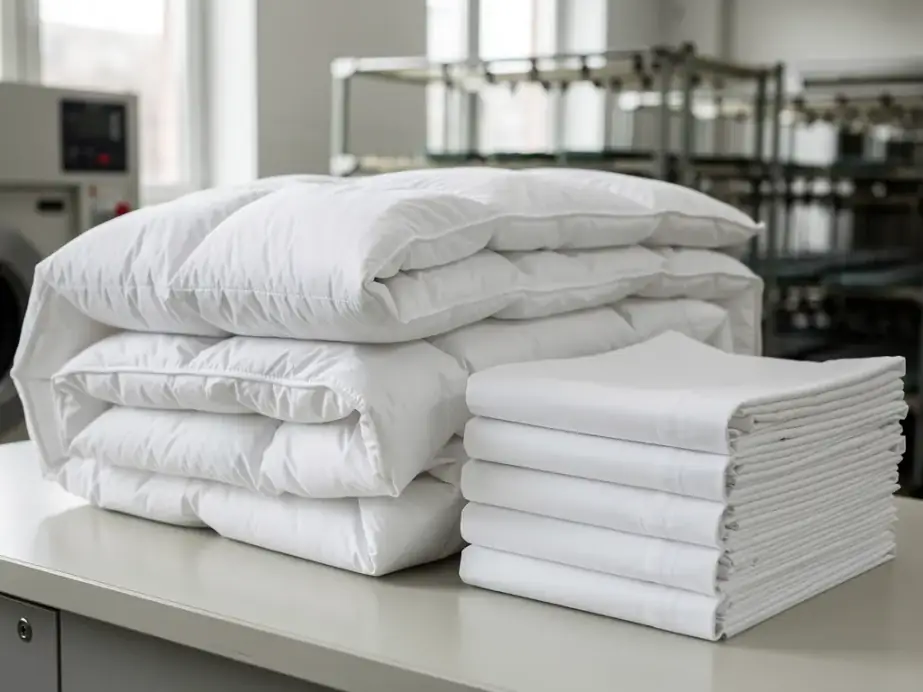
Beds in South Florida do a lot of work. Air conditioning cools the room overnight, humid air seeps back in all day, and your comforter and sheets soak up the difference. Down and fine linen are natural materials, and natural materials hold moisture. Care for them the way you'd care for a good wool coat: gently, dried completely, and not more often than necessary.
Dry clean or wet clean: how to choose
Start with the care label and treat it as the minimum. Then think about what the item is actually made of. Down and feather comforters can be cleaned either way, but the method matters less than the drying. Silk, linen with delicate trims, velvet, embroidered or beaded pieces, and anything labeled dry clean only should go to a professional. Cotton percale and sateen sheets are usually happy at home.
Wet cleaning means washing gently in controlled water with a mild detergent, then drying with great care. Solvent cleaning uses no water, so it's the safer path for fabrics that shrink, ring, or lose color when wet. Fine silk and linen sheets can go either way depending on the weave and finish, and Spartan Dry Cleaners handles silk and fine linen sheets by wet clean or solvent, whichever suits the fabric.
Why down needs a long, slow dry
The enemy of a down comforter is moisture left in the fill. Down clusters hold water deep in their centers. If a comforter comes out of the machine feeling dry on the surface but still damp inside, the clusters clump together, lose their loft, and start to smell sour. In humid air, that smell can turn into mildew before you notice.
A slow, low-heat dry with something tumbling inside to break up the clumps brings the fill all the way back to dry and fluffy. That is how Spartan dries down and feather comforters: a long, controlled dry with tumbling balls. You can do a version at home, but it takes patience. Use low heat, expect several cycles, and pull the comforter out to shake and rearrange it between each one. If the center still feels cool when you press your hand into it, it isn't done.
How often is often enough
Cleaning too rarely lets body oils and dust build up. Cleaning too often wears the fabric and flattens the fill, because down loses a little loft each time it's processed. A sensible rhythm looks like this.
- Sheets and pillowcases: every week or two, following the label. Fine linen and silk can be gentler, and laundered a little less often if they're rested in rotation.
- Duvet covers: every two to four weeks, which is what keeps the comforter inside clean longer.
- Comforters used under a duvet cover: every one to two years, or sooner if they smell even after airing.
- Comforters used without a cover: about once a year.
- Heirloom quilts: as rarely as possible, and only after someone has looked at them closely.
- Pillows: roughly every six months, with the fill dried as carefully as a comforter.
Heirloom quilts and anything handmade
A quilt your grandmother stitched doesn't belong in an ordinary cycle. Old cotton, hand stitching, antique dyes, and uneven shrinkage between patches make every quilt its own puzzle. A careful cleaner looks it over seam by seam before deciding how to proceed. Spartan inspects heirloom quilts by hand first, and that first look is the real service, because it decides whether and how the quilt should be cleaned at all.
Storing and airing bedding in humid weather
Cleaning is only half the job. How bedding is stored decides whether it stays fresh.
Keep out-of-season comforters in a breathable cotton bag or a clean pillowcase, never a sealed plastic bag. Plastic traps moisture and invites mildew. Store them in an air-conditioned interior closet, on a shelf, not on the floor. Guest room bedding that sits unused for months absorbs damp as well, so refresh it before visitors arrive instead of assuming it's fine.
In everyday use, pull the covers back for an hour each morning before making the bed. It lets the mattress and bedding release the moisture of the night, and it makes a real difference in a humid bedroom. A ceiling fan on low helps, and so does a room that stays air conditioned while you're away.
Early warning signs
Watch for a faint sour or musty smell when you open the closet, small grey freckles on white fabric, a clammy feel to a comforter that should be dry, or a flat, lumpy fill. Any of those means it's time for a proper cleaning and a thorough dry. A spritz of fabric freshener isn't the answer, because perfume covers the smell and leaves the mildew where it is.
If you have a down comforter that has seen a few summers, a set of silk or linen sheets you love, or a quilt you can't afford to lose, call Spartan Dry Cleaners at (561) 588-8645 or book a free pickup. They'll look at what you have, tell you how they'd clean it, and bring it back ready to use.
Spartan Dry Cleaners, (561) 588-8645
Call (561) 588-8645More articles
How to Store a Wedding Gown in South Florida Humidity
A cleaned gown is only half protected, because the other half is where the box lives for decades.
Champagne, Sugar and Sweat: Why Invisible Stains Turn Brown
The spill dried clear, the dress went back in the closet, and three weeks later there's a tan patch that wasn't there before.